



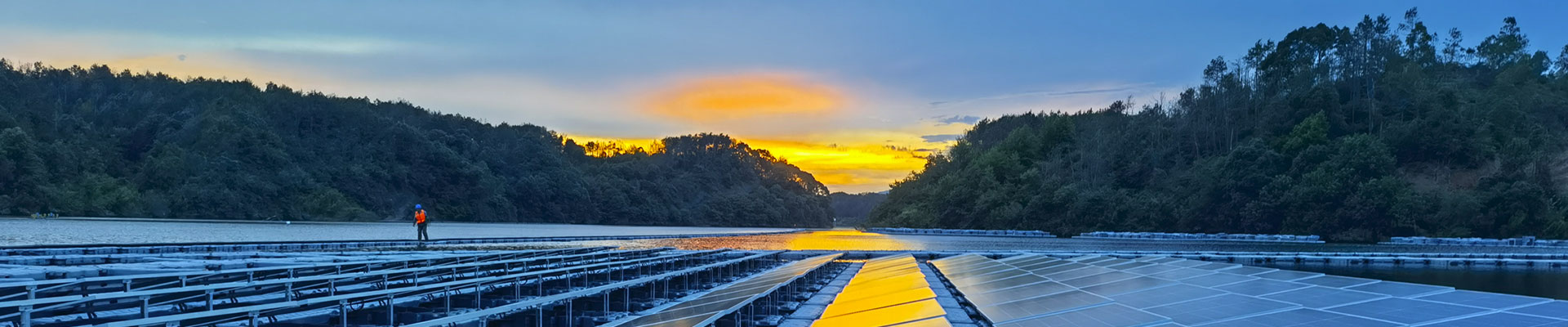




DAS Solar's DBC Technology Opens a New Era of Boundary-Free PV Applications
2026-02-11
As the global energy transition accelerates, solar power has evolved from a supplementary energy source into a cornerstone of modern energy systems. At the same time, the PV industry is entering a more demanding phase marked by technology convergence, capacity pressure, and intensifying competition. Against this backdrop, back-contact (BC) cell technology—known for its high efficiency, low degradation, and strong application flexibility—is emerging as a key pathway for enabling the next stage of industry development.
As an active innovator in the BC ecosystem, DAS Solar has advanced its proprietary DBC (DAON-BC) 3.0 Plus technology through multiple generations of iteration. With clear progress in efficiency performance, application adaptability, and industrial scalability, DBC technology is moving beyond laboratory validation toward real-world deployment, providing a practical foundation for broader BC adoption across the industry.
Unlocking Efficiency While Rebuilding Long-Term Value
From an industry-wide perspective, BC technology represents one of the most effective routes for pushing crystalline silicon cells closer to their theoretical performance limits while continuing to reduce LCOE. By relocating all current-collecting electrodes to the rear side of the cell, BC architecture eliminates front-side shading losses and maximizes active light absorption. This structural advantage enables BC cells to approach the practical efficiency ceiling of single-junction silicon technology, positioning them among the most advanced commercial PV solutions available today.
As market competition shifts away from pure price-based strategies toward value-driven differentiation, efficiency gains increasingly translate into tangible economic benefits. Higher conversion efficiency not only improves project yields but also supports lower carbon footprints across the system life cycle.
Equally important, BC technology is developing along a more collaborative and diversified path than previous single-track technology cycles. Rather than concentrating around a single supplier or process route, BC has attracted participation from multiple companies across the value chain. This open ecosystem encourages process sharing, cost optimization, and faster learning curves. Industry projections suggest BC products will continue to gain market share over the coming decade, supported by this multi-participant, co-evolving landscape.
From Performance Breakthroughs to All-Scenario Deployment
Within this broader transition, DAS Solar's DBC platform has emerged as a performance benchmark in the BC segment. Since initiating BC-focused R&D in 2020, the company has steadily strengthened its technical foundation while aligning innovation with manufacturability and real-world application needs.
At the cell level, DBC 3.0 Plus leverages DAS Solar's advanced passivated contact expertise, combining refined material systems with optimized pattern design to improve carrier separation and collection efficiency. The latest generation has achieved a certified cell efficiency of 27.77%, with open-circuit voltage reaching 747 mV. At the module level, efficiencies exceed 24.8%, and power output can surpass 680 W when combined with high-density packaging and optical-electrical optimization. These gains are supported by rigorous reliability validation, including high-load mechanical testing and extended ultraviolet aging, confirming stable performance under long-term operating conditions.
DBC modules also incorporate design innovations such as concealed interconnection and low-loss current collection processes, reducing electrical losses associated with shading and stress while maintaining structural integrity. The result is a product platform that balances high efficiency with long-term durability.
Expanding the Boundaries of PV Applications
Beyond efficiency metrics, DBC technology is redefining how and where solar modules can be deployed. Through flexible customization of form factor, weight, and appearance, DAS Solar's DBC modules adapt to a wide range of use cases, from commercial and industrial rooftops to BIPV, public facilities, and premium residential projects.
For commercial rooftop owners, higher power density enables greater energy yield per unit area, accelerating payback periods and improving asset utilization. In architectural applications, DBC modules can be tailored to align with facade and roof designs, allowing solar technology to integrate seamlessly into the built environment. For distributed generation investors and residential developers, the combination of long-term reliability and differentiated design supports higher project value while reducing operational risk.
This application-driven flexibility allows PV systems to move beyond standardized deployment models, unlocking new revenue streams and reinforcing solar's role as a multifunctional energy solution rather than a one-dimensional power generator.
Industrialization, Cost Control, and Standards Leadership
Achieving scalability without compromising cost or quality remains a central challenge for advanced PV technologies. DAS Solar addresses this through process innovation aimed at resolving the traditional trade-offs between efficiency, cost, and mass production. By introducing semiconductor-grade photolithography in place of conventional laser patterning, the DBC process achieves higher precision with reduced thermal impact and broader process windows. Complementary wet-processing techniques further reduce material waste and environmental load.
On the materials side, DAS Solar has advanced electrode designs that reduce silver consumption through selective use of base metals, lowering material costs while maintaining electrical performance and long-term stability. These manufacturing innovations are key enablers for large-scale DBC deployment.
Beyond product development, DAS Solar is actively contributing to the establishment of technical standards and shared industry frameworks for BC technology. Through extensive patent portfolios, participation in international and regional standard-setting efforts, and collaboration across research platforms, the company is helping accelerate the transition of BC technology from niche innovation to mainstream application.
Toward a Boundary-Free Future for Solar
The photovoltaic industry is entering an era where technology-driven value, not capacity expansion alone, defines competitiveness. BC technology is increasingly recognized as a central pillar of this transition, offering a pathway toward higher efficiency, broader applicability, and more sustainable economics.
Through continuous innovation in DBC technology, DAS Solar demonstrates how advanced cell architectures can be translated into scalable, reliable, and application-ready solutions. As the BC ecosystem matures and adoption expands, solar energy will move further beyond conventional boundaries, delivering not only electricity, but long-term value across diverse environments and energy systems worldwide.
COPYRIGHT© DAS Solar 2022 – All Rights Reserved 浙ICP备19001487号-1 浙公网安备33080302000236